
Starting on August 7, 1961, psychologist Stanley Milgram from Yale University conducted experiments to see how far people would go in obeying authority, even if it meant harming others. Participants thought they were helping in a different experiment where they had to give electric shocks to a “learner.” These shocks were fake but increased to dangerous levels if real.
Surprisingly, many participants followed the instructions completely. Everyone went up to 300 volts, and 65% went up to the maximum of 450 volts. Milgram first reported these results in a 1963 article and later in his 1974 book, Obedience to Authority: An Experimental View.
The purpose of Stanley Milgram’s experiment was to measure how willing people are to obey an authority figure, even if it means performing actions that conflict with their personal conscience. Specifically, Milgram wanted to understand the extent to which ordinary people would follow orders to harm another person, which was relevant to understanding the behaviours seen during events like the Holocaust.
When I first read about this experiment, the first thing that came to mind was, ‘Nah, I would not have listened to Milgram’s orders.’ I went even further with my thoughts and confidently told myself that I would never obey any Nazi commands under any circumstances and that Milgram’s experiment proved nothing. Today, I am not so sure about that.
What confused me was a recent interaction with someone I care about very much. They (I use they as a replacement for their gender) confessed that they met someone. I was very excited about that. But then they started going into details about this new person, and before I knew it, I found myself exploring all sorts of negative scenarios packed with buts and ifs. Without even knowing this new person, just because of how they were described to me—their background, appearance, and place of birth—I felt the need to warn the person I care about of the potential dangers of this new relationship.
While I was speaking, it hit me. I was no different from those superficial people I despise, who judge others based on characteristics they were born with or based on characteristics they are expected to have to be accepted in the ‘clan’. I thought I was different because, when I was very young, I was the only one to raise my hand when our teacher asked us a question with two choices. I believed in my own mind and decided not to follow the crowd, raising my hand even if I was the only one doing it, and it turned out I was the only one with the right answer. That encouraged me for the rest of my life to continue following my own ideas, no matter what I thought others would say or do. I also travelled a lot and interacted deeply with many different cultures, and I was sure that I could see beneath the surface and see people for who they are. However, I am obviously not there yet.
What bothered me even more was the fact that I, personally, have been a victim of preconceptions and misconceptions. People I cared about did not give me a chance to show them who and how I am because of my inborn characteristics, such as my place of birth. For them, I wasn’t good enough because I was born in one country and not another, and here I am reproducing the same behaviour I so strongly condemn! Placing warning signs because of inborn characteristics.
Well, no thank you! I do not want to go down that road; it feels wrong, it is wrong. So, I took my words back and gave a simple advice, which I would give to anyone no matter the circumstances: take things at a natural pace and see how it goes.
Not that I want to excuse myself whatsoever, but what triggered me was the fact that the person I care about told me they wanted to go and bring here this new person they met online without them even meeting face-to-face before the big step—first date turned ‘I’m taking you home with me’. I panicked. That’s a huge responsibility to bring someone from a different country, which happens to be very culturally diverse from your own, to live with you two days after you met them in the real life. They should try to get to know each other, but rushing into moving in without at least a few dates seemed sci-fi to me. I do hope that they will work things out and that love will win.
As for me, I won’t be too harsh on myself, I’ll take it as a lesson, as in life, we never stop learning and growing.
Thanks for reaching the end of my fifth blog post.





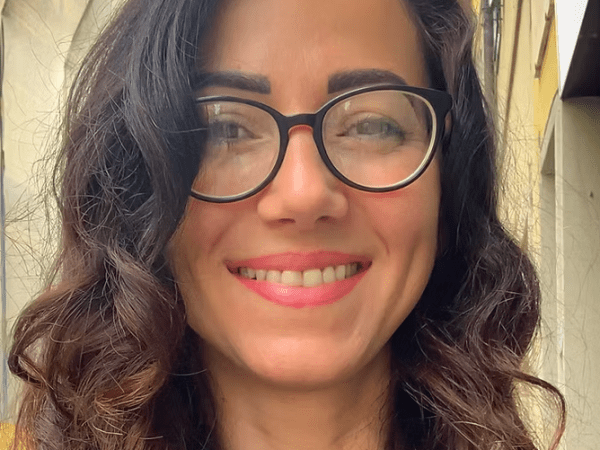




 Mihaela Claudia P
Leave a reply to Mihaela Claudia P Cancel reply